Gout Diet: What a Safe Day of Meals Looks Like
What an actual gout-friendly day looks like: breakfast, lunch and dinner with their purine load, the swaps that cut it in half, and where alcohol fits in.
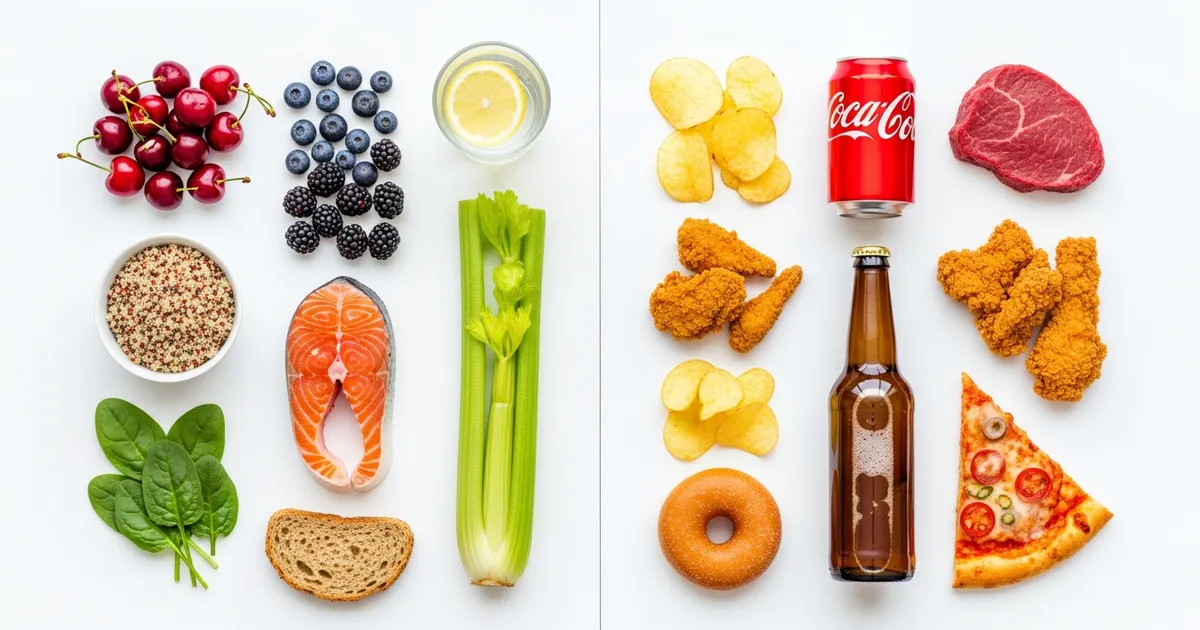
The gout food chart classifies foods into three categories based on their purine content (organic compounds converted into uric acid during digestion): foods that are forbidden or very limited (organ meats, anchovies, sardines, beer) containing more than 150 mg of purines per 100 g, foods to be consumed in moderation (red meats, seafood) between 50 and 150 mg per 100 g, and foods permitted without restriction (vegetables, dairy products, eggs) generally below 50 mg per 100 g.
Gout is an inflammatory joint disease caused by the accumulation of monosodium urate crystals in the joints, secondary to an excess of uric acid in the blood (hyperuricemia). It affects approximately 1 to 2% of the adult population according to the CDC, with a clear male predominance. Although gout is also influenced by genetic and renal factors, diet plays a major role in preventing attacks and controlling uricemia. Understanding precisely which foods to avoid or favor is a fundamental step in managing the condition.
Why does diet directly influence gout?
Diet directly influences gout because 30% of the uric acid produced by the body comes from the breakdown of dietary purines, according to data published in Arthritis & Rheumatology (Choi et al., 2004). The remaining 70% is of endogenous origin (internal synthesis by the body). A low-purine diet can reduce uricemia by 1 to 2 mg/dL, a significant decrease for patients whose uricemia is slightly above the recommended threshold of 6 mg/dL.
Certain foods, such as beer and fructose-sweetened drinks (a simple sugar that stimulates hepatic synthesis of uric acid), act through different mechanisms than classic purines but produce a similar effect on uricemia. It is therefore essential to have a comprehensive food chart that incorporates not only purine content but also other relevant metabolic parameters.
"Reducing dietary purine intake, combined with good hydration and limiting alcoholic beverages, is the non-drug cornerstone of gout management." — NHS, clinical guidelines on gout management.
Complete chart: permitted, limited, and forbidden foods in gout
The following chart classifies the main food groups according to their purine content and their impact on uricemia, based on nutritional data from the USDA FoodData Central and clinical studies published on PubMed.
| Food | Purines (mg/100g) | Gout status | Notes |
|---|---|---|---|
| Calf liver | 460 | Forbidden | Organ meat to be avoided entirely |
| Anchovies (canned) | 321 | Forbidden | Extremely high content |
| Sardines in oil | 280 | Forbidden | Even in small quantities |
| Beef kidneys | 269 | Forbidden | All organ meats concerned |
| Smoked herring | 210 | Forbidden | Fatty fish high in purines |
| Beef (steak) | 110 | Limit | Max 100–150 g per serving, 3x/week |
| Pork (loin) | 90 | Limit | Better than organ meats |
| Shrimp | 87 | Limit | Small portions occasionally |
| Chicken (breast) | 70 | Limit | Best meat for gout |
| Salmon | 63 | Limit | Beneficial omega-3s despite purine content |
| Cooked lentils | 35 | Permitted | Plant purines less absorbed |
| Cooked spinach | 30 | Permitted | Not associated with attacks (2012 studies) |
| Whole egg | 2 | Permitted | Excellent for gout |
| Low-fat cottage cheese | 0 to 5 | Permitted | Demonstrated uricosuric effect |
| Semi-skimmed milk | 0 | Permitted | Reduces risk of gout attack |
| Tomato | 11 | Permitted | Trigger factor in some patients |
| Fresh cherries | 7 | Permitted | Demonstrated anti-inflammatory effect |
| Beer (12 fl oz) | Equivalent 50+ mg + fructose | Forbidden | Risk multiplied by 1.5 per glass |
| Sweetened fruit juice | 0 (active fructose) | Limit | Fructose stimulates uricemia |
| Black coffee (2 cups/day) | Negligible | Permitted | Possible protective effect (Choi, 2007) |
Source: USDA FoodData Central, purine data compiled from clinical studies referenced on PubMed.
Foods to absolutely avoid during a gout attack
During an acute gout attack, foods containing more than 150 mg of purines per 100 g must be completely eliminated, and red meats ideally reduced to zero during the first 48 to 72 hours. To learn more about managing diet during an acute phase, consult our guide on what to eat during an acute gout attack.
Organ meats: the first category to eliminate
Organ meats (liver, kidneys, heart, sweetbreads, brain) contain between 200 and 460 mg of purines per 100 g according to USDA data. This concentration is 4 to 8 times higher than the recommended tolerance threshold. Organ meats must be permanently excluded from the diet of people with gout, not only during attack periods.
Fish very high in purines
Certain fish have purine levels comparable to organ meats: anchovies (321 mg/100g), sardines (280 mg/100g), herring (210 mg/100g), and mackerel (145 mg/100g). These fish must be completely avoided. However, salmon (63 mg/100g) and trout (57 mg/100g) can be consumed in moderation, as their omega-3 fatty acid content offers anti-inflammatory benefits.
Alcohol, and particularly beer
Beer is the most harmful alcohol for gout for two cumulative reasons: it contains purines from yeast (approximately 14 mg per 12 fl oz) and ethyl alcohol reduces the renal excretion of uric acid. Each additional glass of beer per day increases the risk of a gout attack by 49% according to a study published in The Lancet (Choi et al., 2004). Non-alcoholic beer remains problematic. For further reading, consult our article on hydration myths and reality for gout.
Beneficial foods to prioritize in the anti-gout diet
Low-fat dairy products, cherries, water, and coffee are the best-documented foods for reducing the risk of gout attacks and lowering uricemia.
Dairy products: a demonstrated uricosuric effect
Low-fat dairy products (skimmed milk, plain yogurt, fat-free cottage cheese) exert a uricosuric effect (promoting the elimination of uric acid by the kidneys). Consuming two servings of low-fat dairy products per day is associated with a 43% reduction in the risk of gout according to Choi et al. (Arthritis & Rheumatism, 2005). Their purine content is virtually zero (0 to 5 mg/100g).
Cherries: a natural anti-inflammatory food
Cherries contain anthocyanins (plant pigments with anti-inflammatory properties) that partially inhibit xanthine oxidase, the enzyme responsible for converting purines into uric acid. A study published in Arthritis & Rheumatism (Zhang et al., 2012) reports a 35% reduction in the risk of gout attacks with cherry consumption in patients already affected. Learn more in our article on cherry juice for gout: benefits and tips.
Coffee: a protective effect to consider
Coffee (without sugar) is associated with a reduction in uricemia in several epidemiological studies. Data indicates that consuming 4 cups per day is associated with an average uricemia that is 0.26 mg/dL lower. For a detailed analysis, consult our article on whether coffee protects against gout: what the studies say.
Special cases: purine-rich vegetables and fructose
Purine-rich vegetables (spinach, asparagus, mushrooms, cauliflower) are not associated with an increased risk of gout attacks, unlike purines of animal origin. This distinction is fundamental and often misunderstood.
A study by Choi et al. published in the New England Journal of Medicine (2004) demonstrated that consuming vegetables with a high purine content did not significantly increase the risk of gout, unlike meat and seafood. Plant purines are less bioavailable and the alkalizing environment of vegetables promotes the elimination of uric acid. These foods can therefore be consumed freely, as confirmed by the Mayo Clinic in its nutritional recommendations.
Fructose, on the other hand, is an independent risk factor. Sweetened sodas, industrial fruit juices, and confectionery made with high-fructose corn syrup stimulate hepatic synthesis of uric acid via a metabolic pathway distinct from that of purines. Their consumption should be strongly limited.
Hydration: the forgotten pillar of the anti-gout diet
A water intake of 2 to 3 liters per day is recommended to promote the renal elimination of uric acid. Alkaline water or bicarbonate-rich mineral water can slightly alkalinize the urine and improve the solubility of urates, thereby reducing the risk of urinary lithiasis (kidney stones), a frequent complication of untreated gout.
The American College of Rheumatology (ACR) also recommends spreading fluid intake throughout the day, with particular attention in the evening to prevent nocturnal attacks. To understand why attacks mainly occur at night, consult our article on gout attacks at night: why they happen and how to react.
Frequently Asked Questions
Which foods are strictly forbidden during a gout attack?
During an acute gout attack, organ meats (liver, kidneys, sweetbreads), anchovies, sardines, herring, beer, and all strong alcohols are strictly forbidden. Red meats should be reduced to a minimum or eliminated during the first 48 to 72 hours of the attack. Sweetened fruit juices and sodas should also be avoided due to their fructose content.
Are vegetables such as spinach or mushrooms dangerous for gout?
Spinach, mushrooms, asparagus, and cauliflower, although rich in plant purines, are not associated with an increased risk of gout attacks according to clinical studies (Choi et al., NEJM, 2004). They can be consumed freely as part of a balanced diet. The bioavailability of plant purines is significantly lower than that of animal purines.
Can you eat meat when you have gout?
White meat (chicken, turkey) contains between 50 and 70 mg of purines per 100 g and can be consumed in portions of 100 to 120 g, a maximum of three times per week. Red meats (beef, pork, lamb) contain between 90 and 130 mg of purines per 100 g and should be limited to twice a week, outside of attack periods. Organ meats should be permanently banned.
Are milk and dairy products good for gout?
Yes, low-fat dairy products are among the most beneficial foods for gout. They contain less than 5 mg of purines per 100 g and exert a uricosuric effect that promotes the elimination of uric acid by the kidneys. Two daily servings of skimmed milk or plain yogurt are associated with a 43% reduction in the risk of gout according to Choi et al. (2005).
How long does it take to see an effect on uricemia from this diet?
A low-purine diet followed rigorously for 4 to 6 weeks generally allows uricemia to be reduced by 1 to 2 mg/dL according to available clinical data. This effect is significant but insufficient in patients with severe hyperuricemia (above 8 mg/dL), for whom long-term drug treatment (allopurinol, febuxostat) is essential as a complement. Dietary management is part of a comprehensive and sustainable strategy, and not as an exclusive short-term solution.